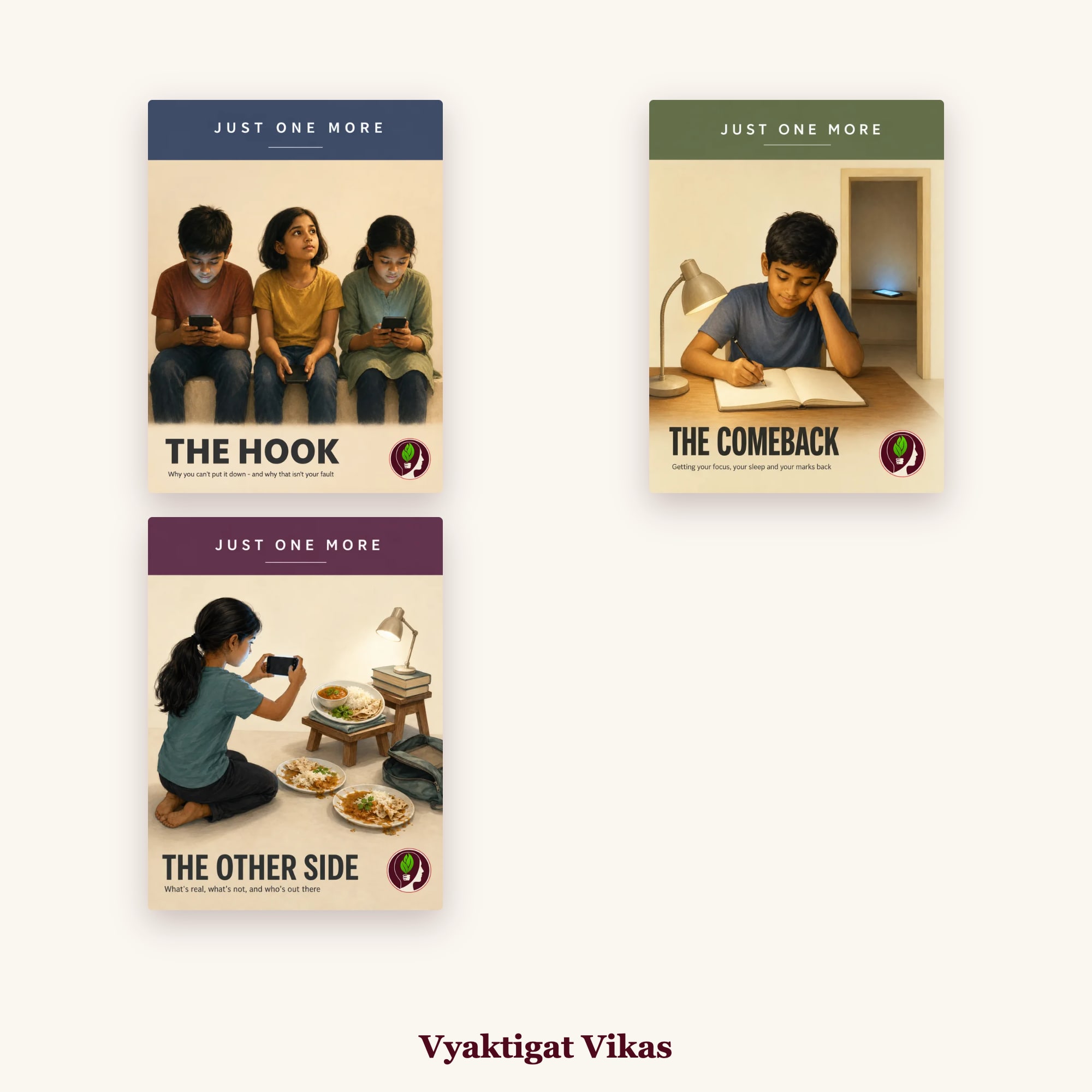
Just One More in bulk
English · GST 0% · for Schools
100 × ₹549
₹54,900
🚚 Delivered by about Wed, 11 Nov after payment — our print room confirms the date on your quotation.
Delivery to one address is included. Bulk orders are prepaid; cash on delivery is not available.
Our team sends the quotation and proforma invoice on WhatsApp within working hours.
About this book
- 3 Books Set
- English Edition
- Ages 10-14
- 96 full-colour pages
- Write-in activity books
Read the full description ▾Hide the description ▴
JUST ONE MORE
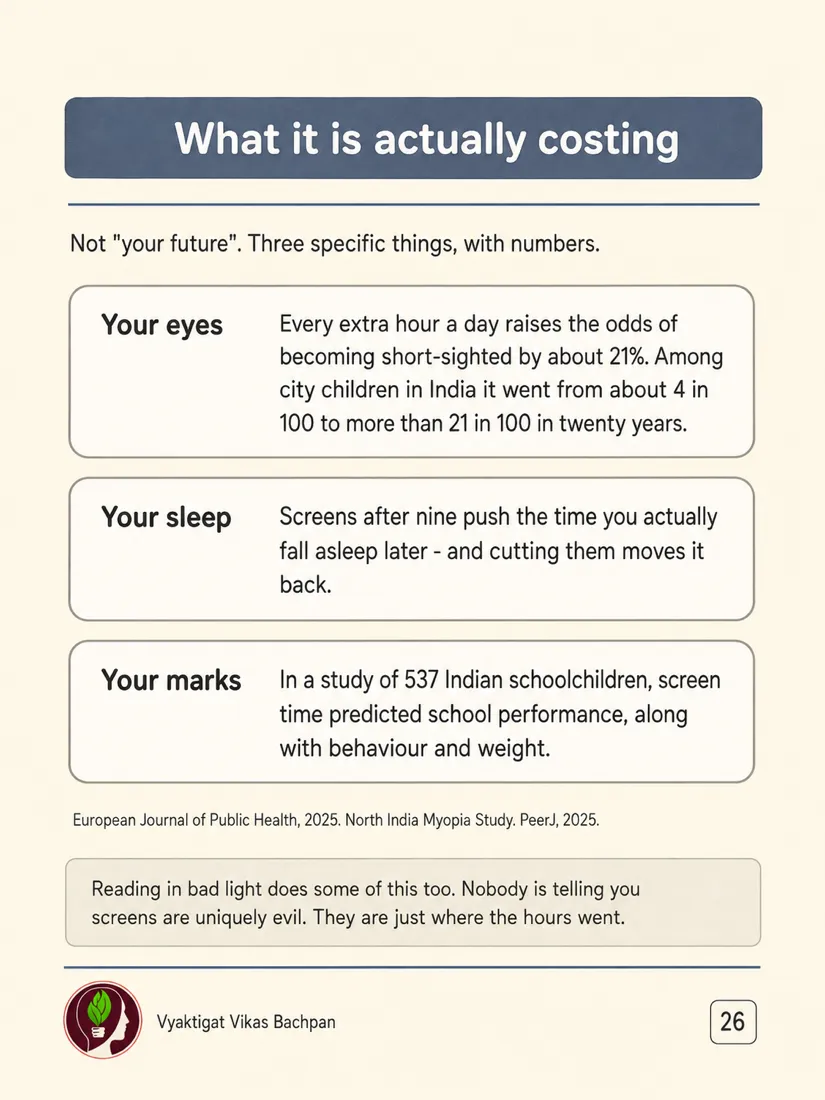
Every extra hour a day raises the odds of needing glasses by about 21%.
Among city children in India, short-sightedness went from about 4 in 100 to more than 21 in 100 in twenty years. That is the part of screen time you cannot argue with — it is physical and it does not go back. Just One More is three write-in books that do something better than telling a child to stop: they show an eleven-year-old exactly how the thing in their hand was engineered, then hand them the tools to take the evening back. Roughly 2 of every 3 pages are theirs to fill in.
What you are getting
3 books · 96 pages in all
Ages 10 to 14
Full colour, written in by the child
Every number Indian — IAP, PeerJ 2025, North India Myopia Study
Parent pages in Book 1
Helpline page: 1098 · 112 · 1930 · cybercrime.gov.in
What is in the three books?
THE HOOK
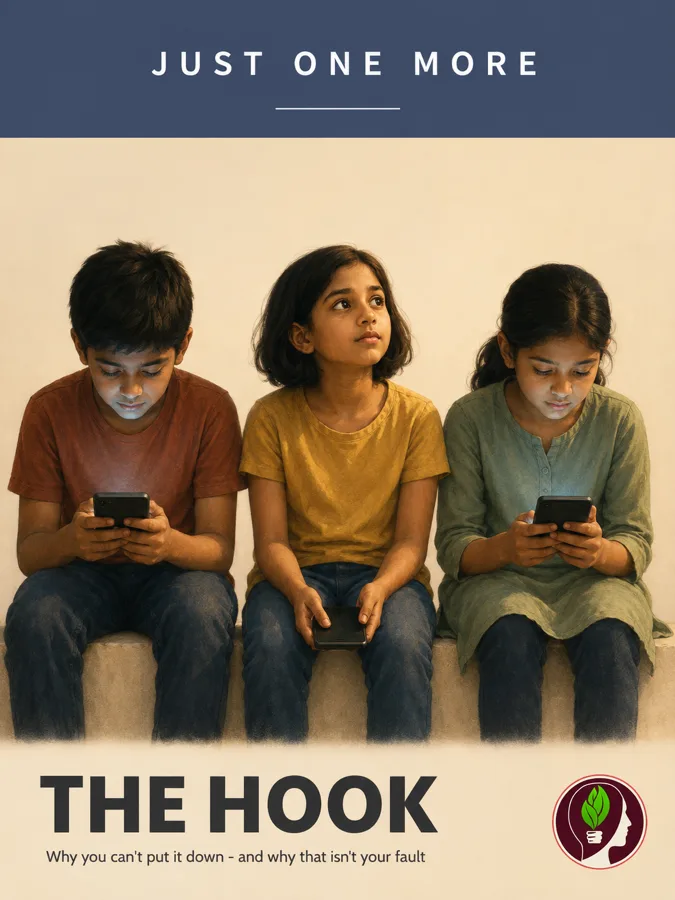
Why you can't put it down - and why that isn't your fault
This book does not ask your child to give anything up. It shows them the machine. Pull-to-refresh is a slot machine lever. The red dot is a debt their brain wants to clear. A streak stopped being a game and became rent. By the end they can name every trick that was built to hold them — and knowing the trick is most of the way out.
Their guess vs their phone's real screen-time number, written side by side
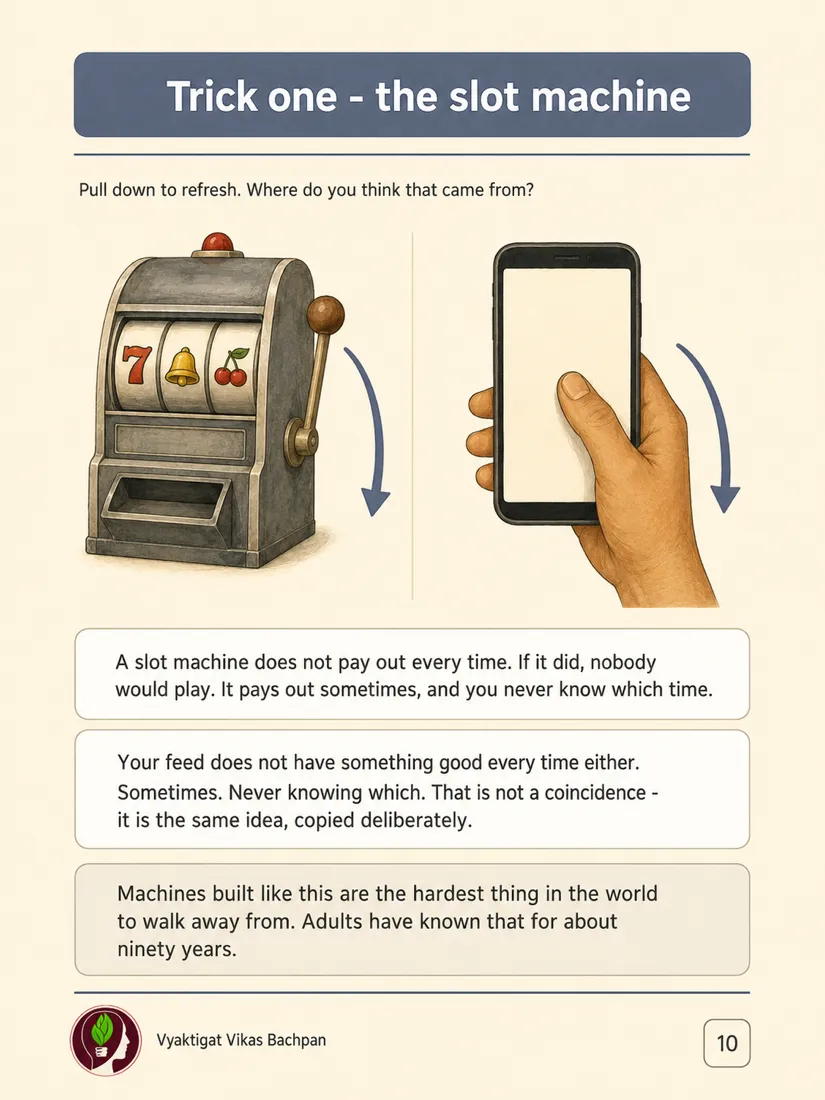
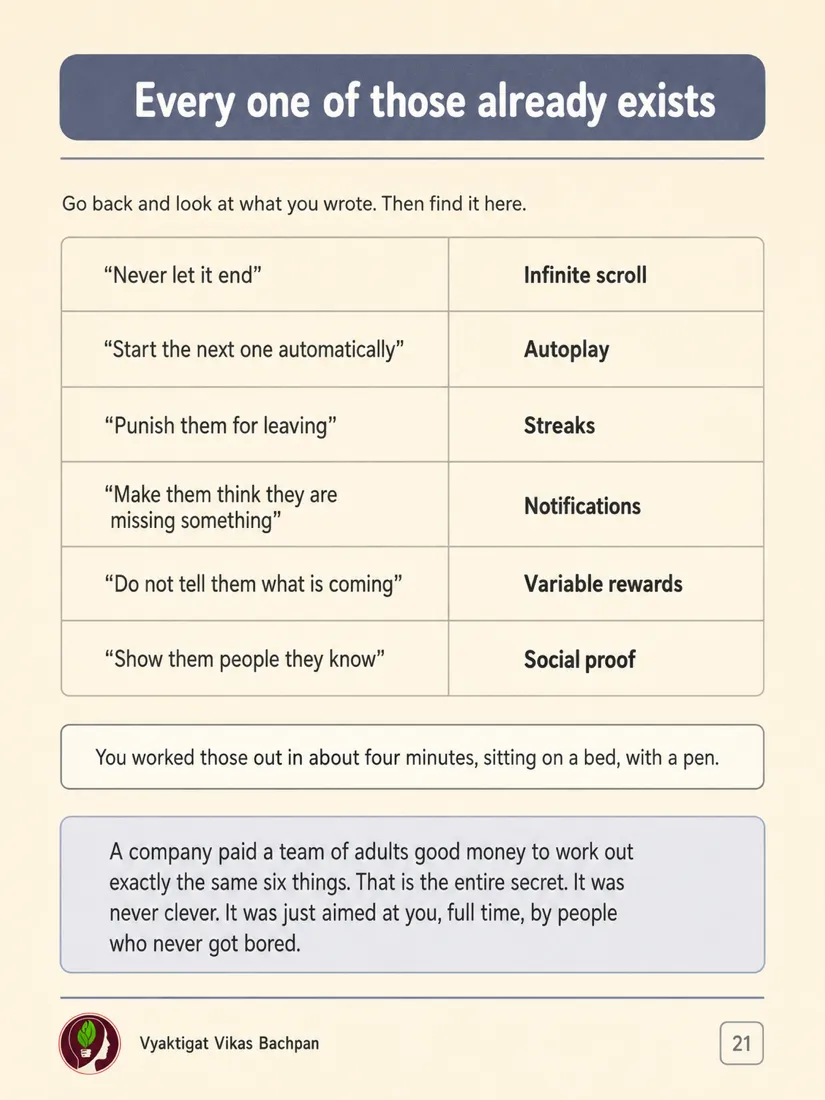
The slot machine, infinite scroll, autoplay, the red dot, streaks
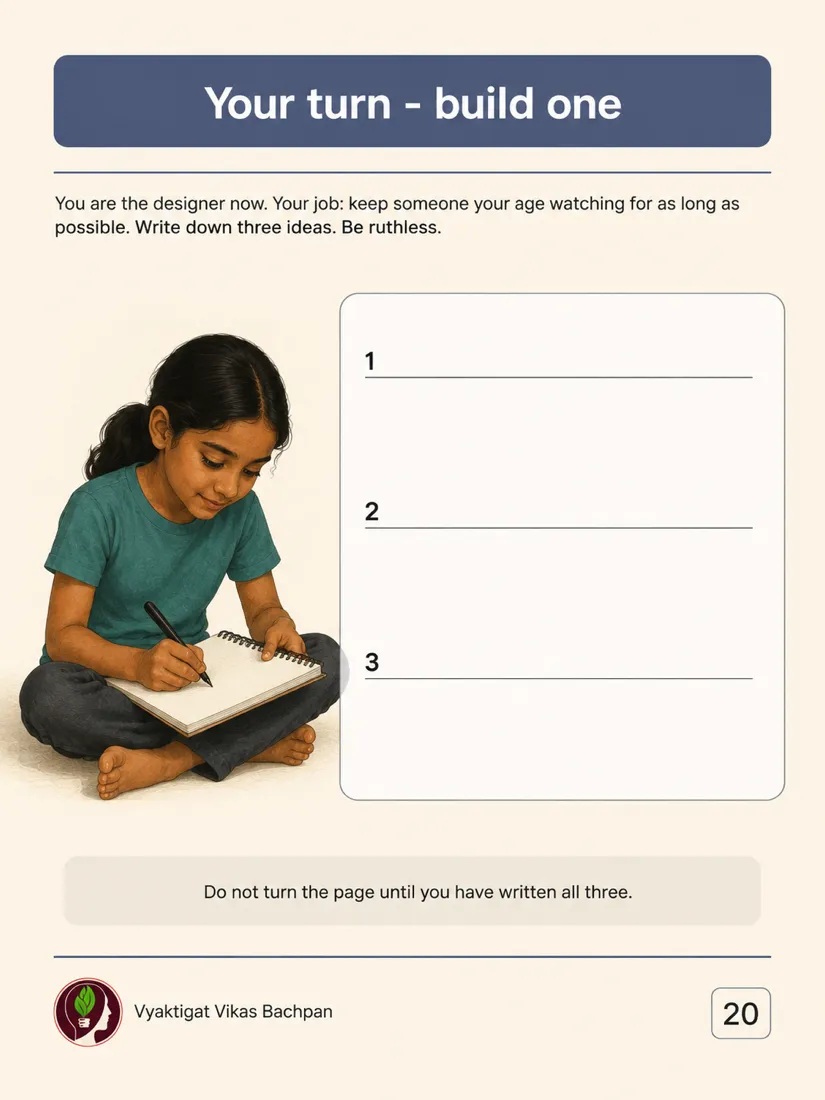
They design three ways to keep a kid watching — then turn the page and find all three already exist
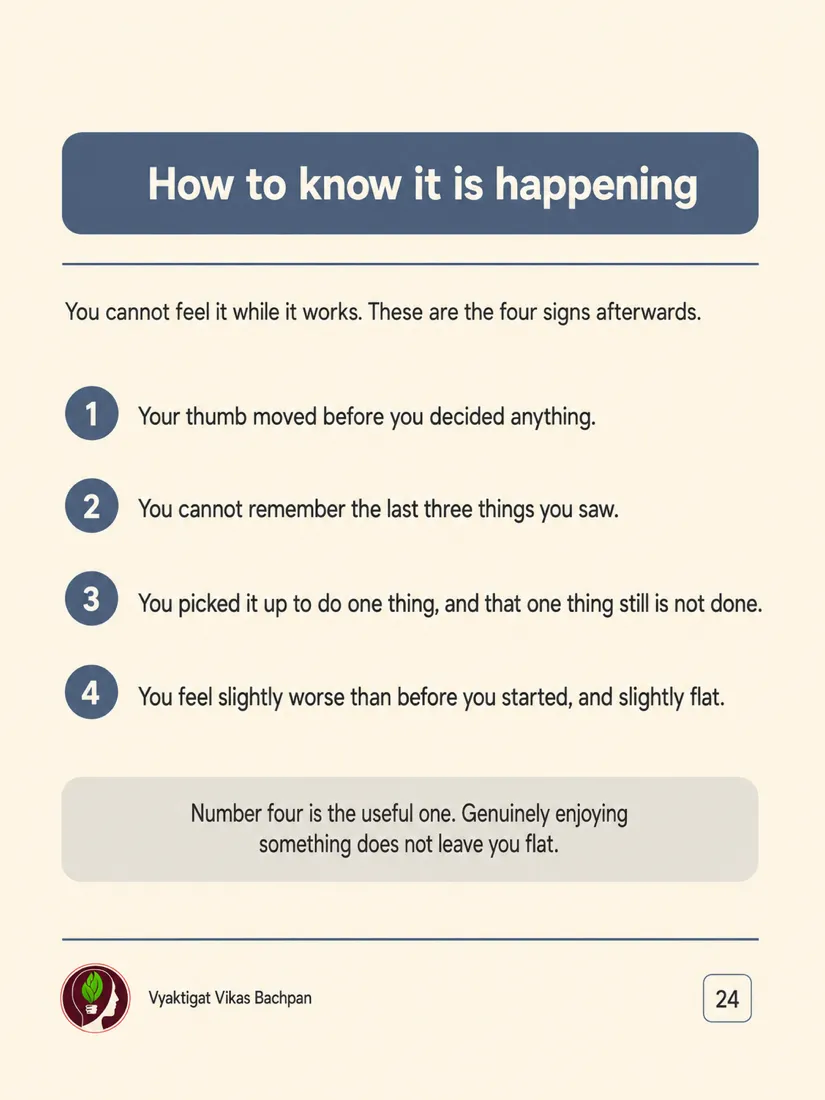
The four tells that it is happening to them right now
THE COMEBACK
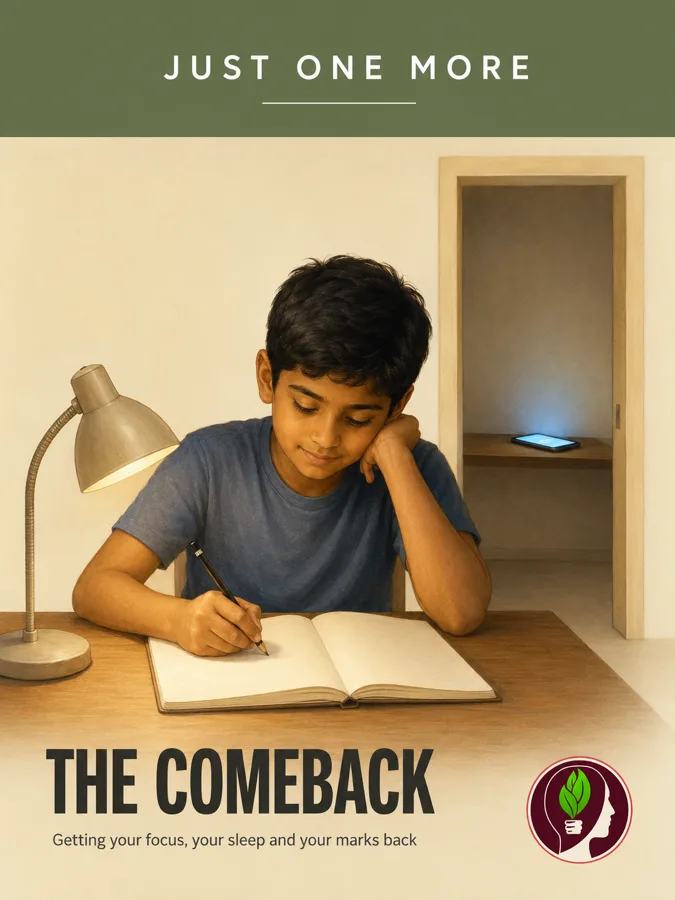
Getting your focus, your sleep and your marks back
The one parents actually lie awake about: padhai me dhyan nahi lagta. This is the working book — roughly seventy per cent activity, because on the published evidence goal setting and self-monitoring beat every other approach to cutting screen time. Your child runs the table test, keeps a seven-night sleep log, redesigns their home screen and writes three rules in their own handwriting.
The table test — two days with the phone in another room, both logged
The seven-night sleep log, and the 9pm line
The boredom list: twenty things written down before they are needed
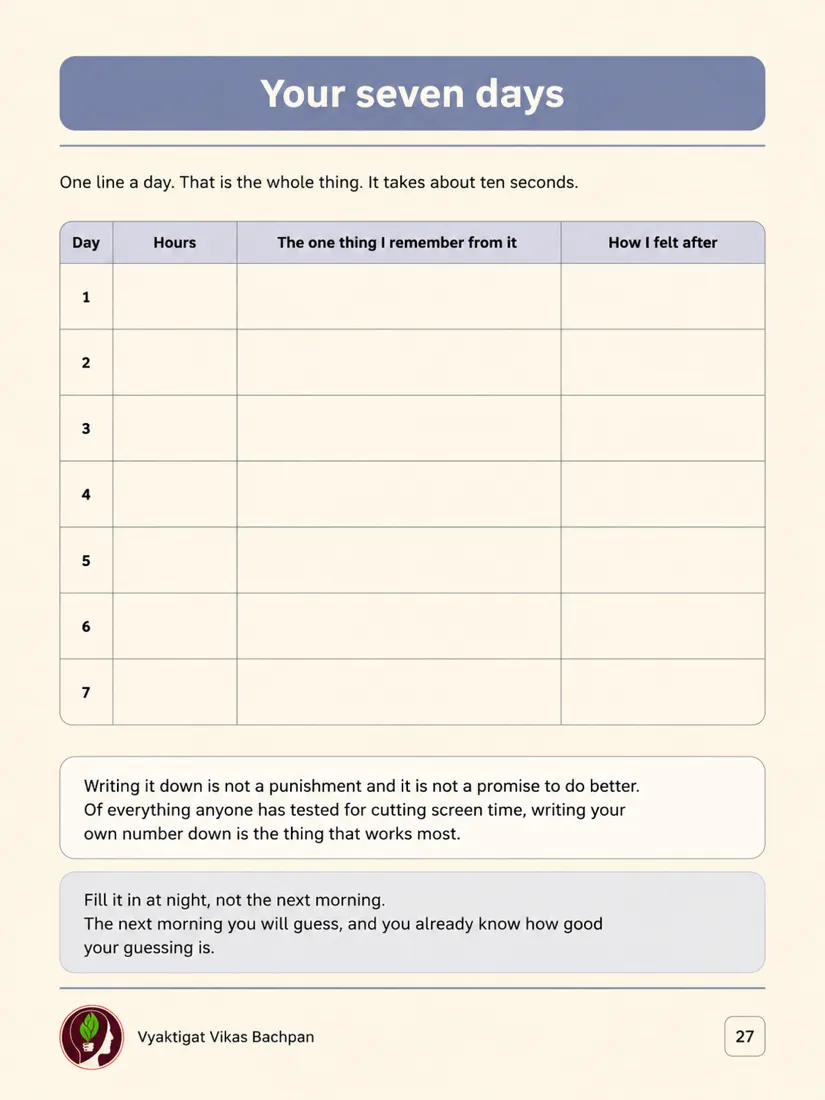
The 7-day comeback tracker — hours, what I did instead, how I felt after
THE OTHER SIDE

What's real, what's not, and who's out there
Judgement and safety, without the scare story. What is outside the frame of a perfect photo. Why comparison is rigged — their inside against somebody's outside. Which accounts leave them feeling worse, in their own handwriting. Ads that do not look like ads. And the pages that matter most: what a grown-up who is pretending actually does, and that they will never, not once, be in trouble for telling.
Spot what was changed, and spot the ad — four images each
The mute page, and the dadi test before you post
Never share: school, uniform, address, live location, home alone
My three adults — names and numbers, in my handwriting
Inside the books
Real spreads from Book 1.
Who is this for?
Parents of a 10–14 year old The eyes argument, with the actual numbers
The child whose focus went Book 2 is 70% activity, and it is the one that works
Homes where the phone is the reward Page 29 explains, gently, why that backfires
Parents who don't want a lecture book Nothing here tells a child to give up their phone
Why this works when lectures don't
Of every technique studied for reducing children's screen time, goal setting, planning and self-monitoring produce the biggest reductions — and short, focused programmes beat long multi-part ones. That is not our marketing angle. That is the published evidence describing exactly this format. And there is one page for you: using the phone as a reward or a punishment — padhai kar lo, phir phone milega — is associated with MORE screen time, not less. Almost every Indian household runs on that sentence.